Guide
World of Warships Ship Classes Explained
World of Warships has five ship classes. Knowing what each one is for — and what threatens it — is the fastest way to stop being surprised in battle. This page contains no partner links.
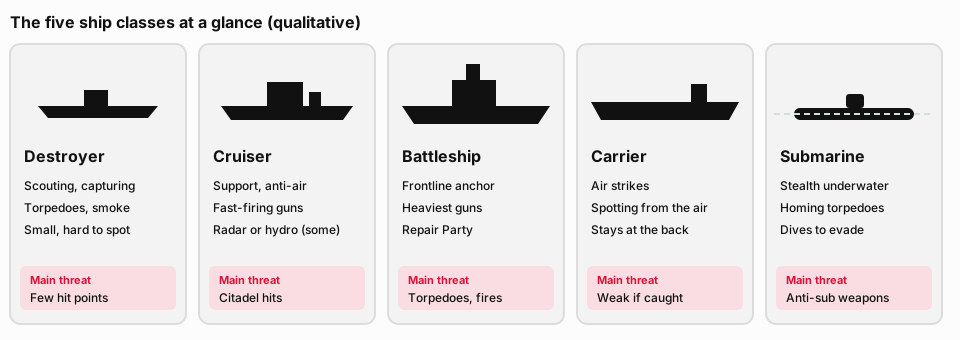
Destroyers
Role: scouting, contesting capture points early, and threatening larger ships with torpedoes. Destroyers are usually the hardest ships to detect, and many carry a smoke generator that hides them and nearby allies.
Watch out for: other destroyers, radar-equipped cruisers and aircraft, which can reveal them. With few hit points, a destroyer caught in the open sinks quickly.
Playing well means: knowing your own detection range, staying undetected when you choose to, and reporting what you see so that your team can shoot it.
Cruisers
Role: the most varied class — fire support, anti-aircraft cover for the fleet, and hunting destroyers. Depending on the ship, cruisers may carry radar, hydroacoustic search, defensive anti-aircraft fire, smoke or a repair consumable.
Watch out for: battleship AP shells. Many cruisers have citadels that are easy to hit when they show their side.
Playing well means: using islands for cover, staying close enough to support allies, and turning away before you are focused.
Battleships
Role: the heavy hitters and damage absorbers. Their big guns fire slowly but hit hard, and most battleships have a Repair Party consumable that restores part of their lost hit points.
Watch out for: torpedoes, fires and being caught broadside. Battleships turn slowly, so bad positioning is hard to fix.
Playing well means: staying in range to influence the battle, angling your armour, and not sitting at maximum range for the whole game.
Aircraft carriers
Role: launching and directly controlling squadrons of attack aircraft, torpedo bombers and bombers, and spotting enemies from the air.
Watch out for: being found by enemy ships — carriers have weak defences in close combat — and heavy anti-aircraft fire, which destroys planes.
Playing well means: choosing targets that help the team, sharing spotting information, and keeping enough aircraft for the late game.
Submarines
Role: stealthy attacks from underwater. Submarines can dive to different depths and fire torpedoes, some of which home in on targets marked with a sonar signal.
Watch out for: anti-submarine weapons such as depth charges and airstrikes available to many surface ships, and limited dive capacity.
Playing well means: managing your dive capacity, surfacing at the right moments, and coordinating with your team.
Which class should a beginner start with?
Low-tier cruisers and battleships are generally considered the most forgiving start. Destroyers, carriers and submarines reward practice but are more punishing while you are learning the basics. Co-op Battles are the best place to try each class. For an overview of the game, go back to our World of Warships guide, or look up terms in the glossary.
Descriptions are general and based on the publisher's documentation; individual ships differ and balance changes over time. If they conflict, the publisher's information prevails. The illustration is original. World of Warships is a trademark of Wargaming; we are not affiliated with, endorsed by or sponsored by Wargaming.